Define a term by its boundary
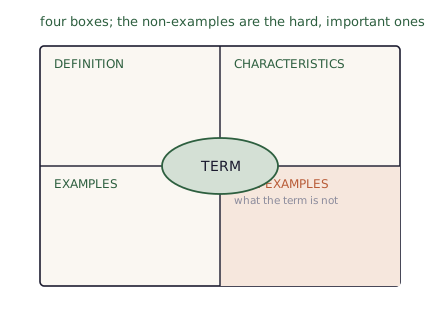
A Frayer Model puts a term in the centre of a four-box grid: Definition, Characteristics, Examples and Non-examples. Groups fill the definition and characteristics, then the examples, and finally the non-examples, which are the heart of the task: they force the group to decide what the term is not. Here the two terms are mass and weight, the deepest confusion in the topic.
It passes the PIES test:
The group shares one grid per term, so the boxes only agree if the group agrees.
Each box is initialled by whoever argued for it; the non-examples reveal who holds the boundary.
The boxes are shared out so each learner contributes to and defends part of the grid.
Every group fills both grids at once, then compares grids across the room.
Definition, then characteristics, then the boundary
Give each group one grid for mass and one for weight, each a four-box template.
Groups complete the definition and characteristics for each term first.
Groups add the examples, then the non-examples; insist on the non-examples for both terms.
Groups compare grids and settle any disagreement, especially over the non-examples.
One for mass, one for weight
Each group completes both grids. The non-examples box is the key step; insist on it for both terms.
Teacher model · both grids filledclick to reveal
When the room does not behave like the plan
Groups skip the non-examples: that box is the point; do not let a grid be handed in with it blank.
A non-example is just a wrong fact: a good non-example is close but on the other side of the boundary, such as "700 N" for mass.
Definitions are copied from the board: ask the group to rewrite it in their own words and defend it.
Short on time: the non-examples and the compare step are the heart of it; protect those over the definitions.
- Support: sentence starters for the non-examples, for example "a non-example of weight is ...".
- Challenge: ask the group to write a one-line rule that decides, for any quantity, whether it is a mass or a weight.